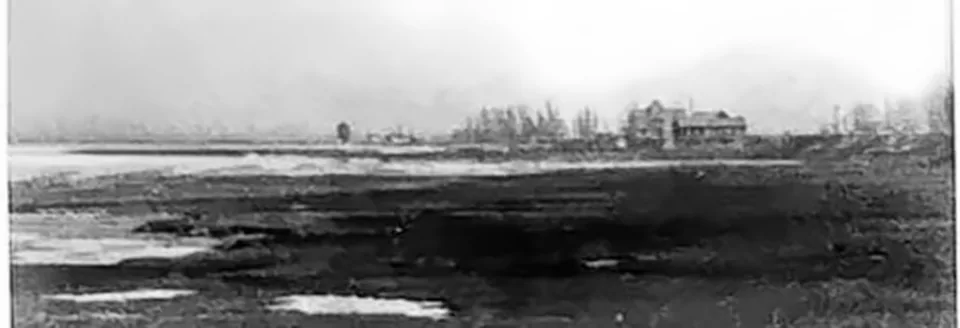
Vineyard took its name from the sand hills below the Orem bench, where grapes, berries and fruit grew well. Below the hills it was a different country. The water table was high and unstable, and the ground was swamp, alkali, salt grass, sagebrush, greasewood and squawberry bushes. Every field in Vineyard today had to be made.
Grasshoppers and fish
The first settlers near the lake bottom farmed along the Provo River in the 1850s. In 1855 grasshoppers came down on their fields so thickly, one pioneer remembered, that they darkened the sun. They ate most of the crop and then drowned in the lake by wagon loads, washing up in walls along the shore. With their harvest gone, people came from as far as Sevier and Salt Lake with wagons, barrels and salt to catch fish for the winter, and the settlers stitched together a seine to supply them with mullet and trout.
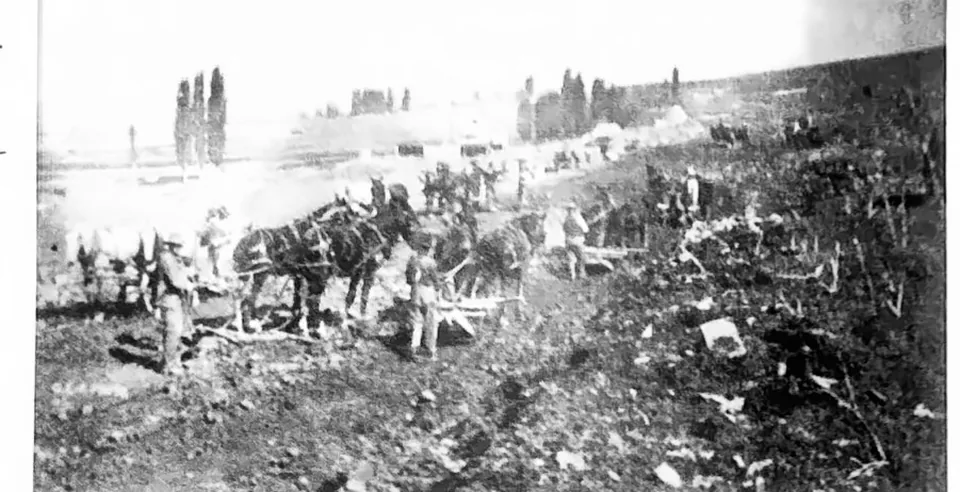
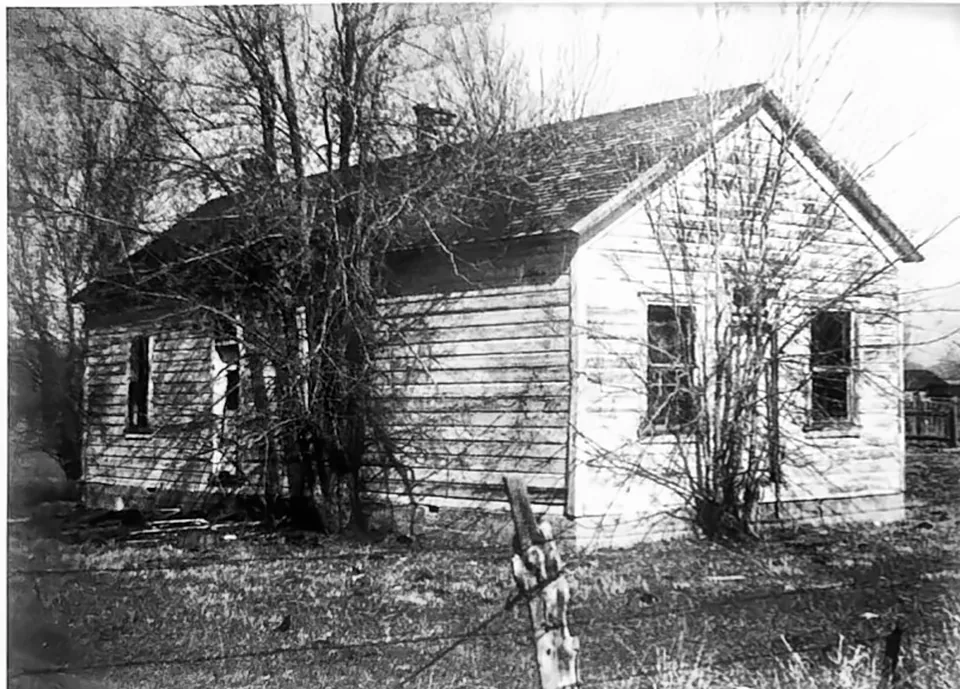
Homesteaders followed in the 1870s, claiming quarter sections of 160 acres at $1.25 an acre. They lived in log cabins and dugouts with dirt floors and dirt roofs, and some lived in their wagons. Drinking water came from springs under the bench and later from wells, and Conrad Maag drilled many of them.
Draining the swamp
To make the land farmable, settlers first dug open drains, often filled with brush and rocks to filter the water. Then they nailed boards into wooden pipes and buried them five or six feet down. Andrew Holdaway was the first to use clay tile, and tile drains now run under nearly every cultivated acre in Vineyard, about five hundred feet apart.
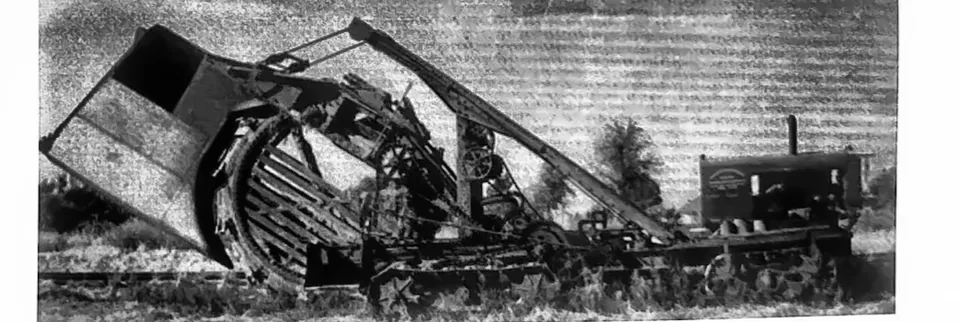
Most of the trenches were dug by hand, sometimes sixty to a hundred rods long and five to eight feet deep, with six or eight inch clay tiles laid in the bottom and spaced so water could seep in. In places the ground was so boggy that settlers built rafts, floated the drains on them, and buried rafts and all. Irrigation water was then run across the fields to leach the alkali down into the drains and away to the lake. A mechanical drain digger, the El Grande, was in use by about 1920, and one farmer was still using it in 1955.
Without these drains in place, a later mayor said, Vineyard would be an alkali wasteland. The drains brought their own hazards. A cracked tile could let irrigation water wash out a hidden sinkhole under an alfalfa field, deep enough to swallow a tractor's front wheels.
Roads and water
Water came by canal. Shadrach Holdaway laid out the Lake Bottom canal in the 1870s along the brow of the West Bench, with his brother David walking ahead. When his daughter asked how he did it without instruments, he said he laid it out by the brim of his hat. The West Union and the Buttermilk canals, named for the foreman who brought buttermilk in his lunch, ran across the bench to the farms below. Water was never certain until the Deer Creek Dam was finished in November 1941 and its reservoir evened out the late summer supply.
So thick did the grasshoppers descend that they fairly darkened the sun.Peter Madsen, recalling 1855
Roads came slowly. Geneva Road, once called the Vineyard Road, began as a two track wagon trail with sagebrush between the ruts, dusty in summer and impassable in a wet spring. A sprinkler wagon wet it down twice a week. Concrete was laid a mile at a time as the state could afford it, and the road finally reached Pleasant Grove in 1929. The railroads came earlier: the Union Pacific in 1873, the Denver and Rio Grande in 1881 and 1882, and the Orem Line interurban in 1914.
The beet slicer
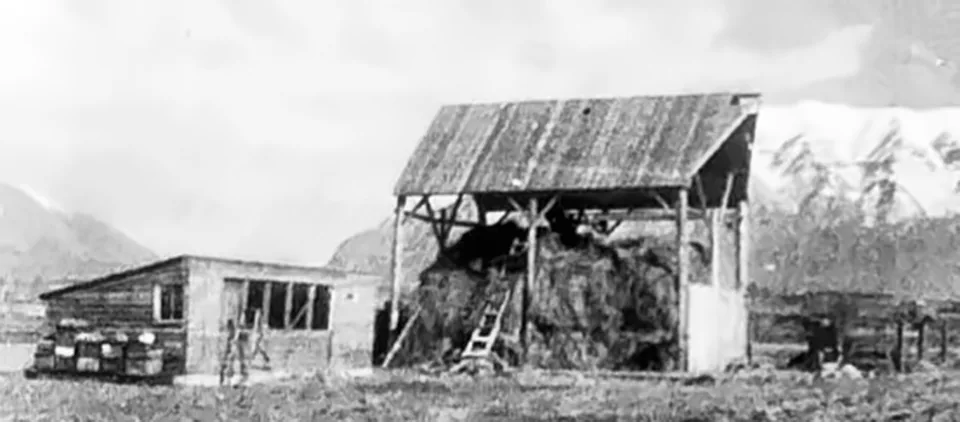
The first big cash crop was sugar beets. Early attempts on the lake bottom failed because the ground was too alkaline, but drains and irrigation fixed that. In November 1900 local growers met in the Provo courthouse and promised to plant beets if the Utah Sugar Company would build a slicer nearby. By January 1901 they had pledged 1,030 acres, and the company bought a site on the Bunnell property for $65 an acre.
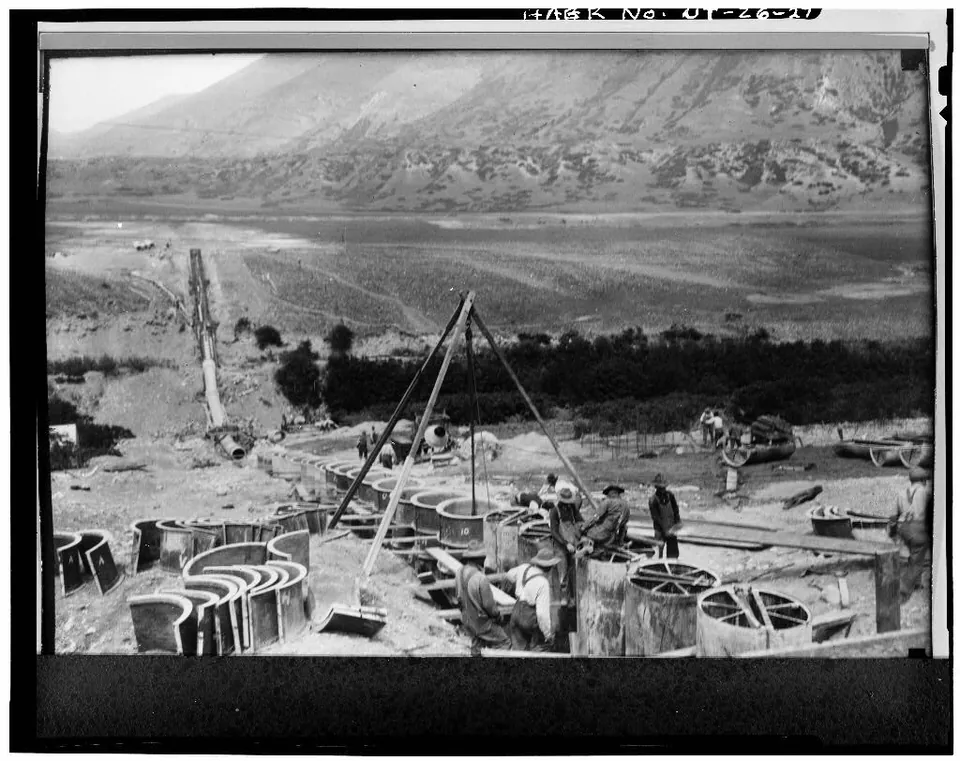
Construction began near Geneva Road in Lake View in late April 1901, and the first beets reached the crusher that September. Sliced beets were cooked and pressed, and the juice was pumped through a pipeline along the railroad, through Lake View, Vineyard and Lindon, to the main factory at Lehi. At the height of the sugar run the slicer employed about a hundred men on twelve hour shifts from late October into February. People later compared it to the arrival of the steel mill. One of its laborers, a husky Lake View man named Jack Dempsey, decided loading beets by hand was not for him and went into boxing instead.
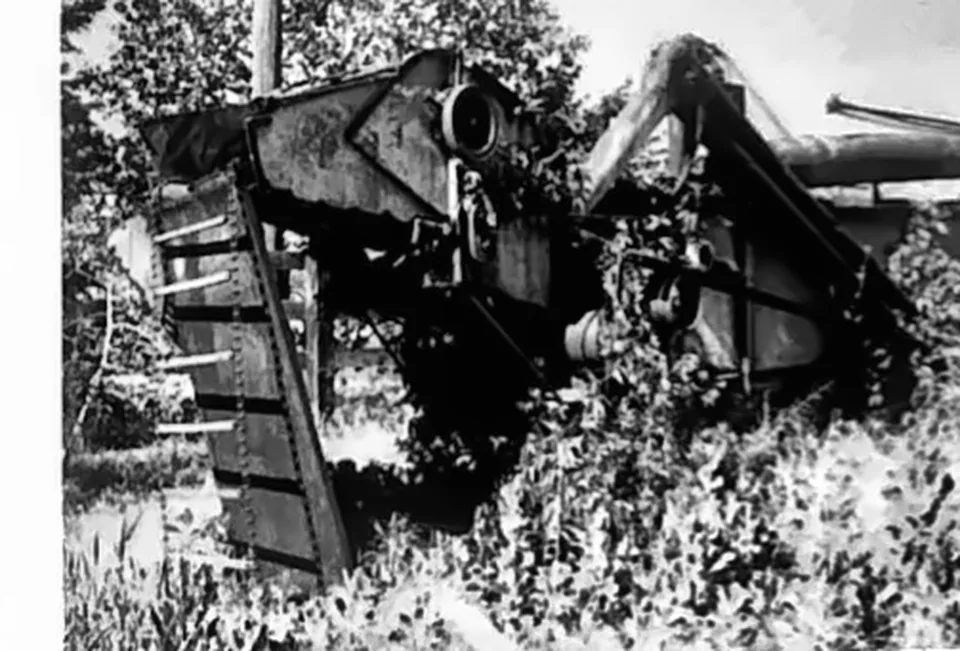
The pipeline ran at three hundred pounds of pressure and leaked often. Men walked it in twelve hour shifts looking for breaks, and farmers complained that cows drinking the spilled, fermenting juice became bloated. The pipeline was abandoned and the slicer closed in 1934. Afterward the old pipe was pulled up and reused to case water wells all over the area.
Harvest
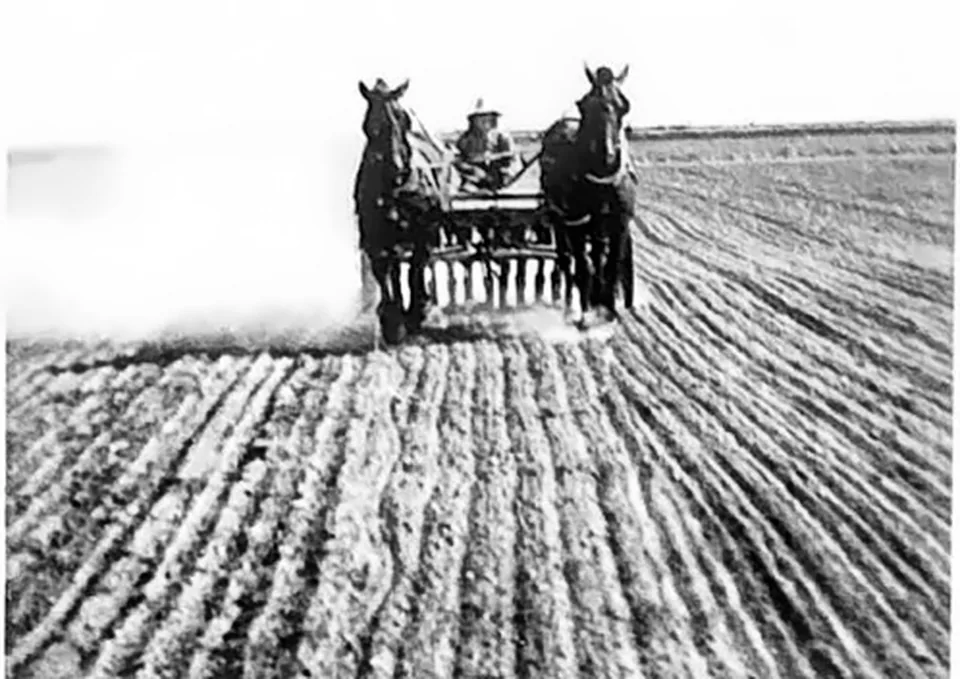
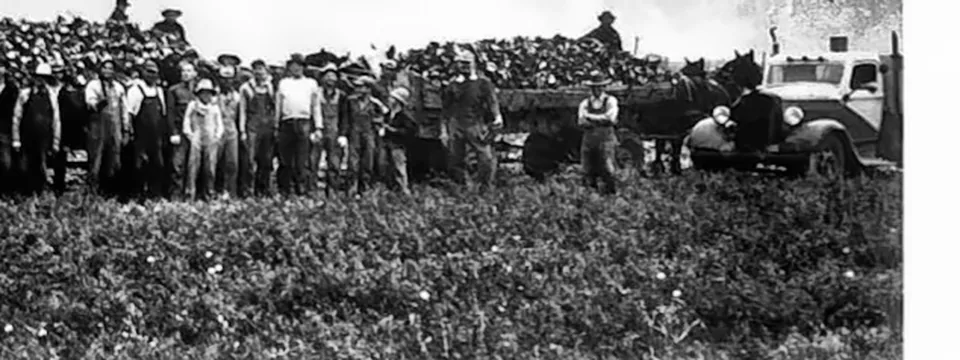
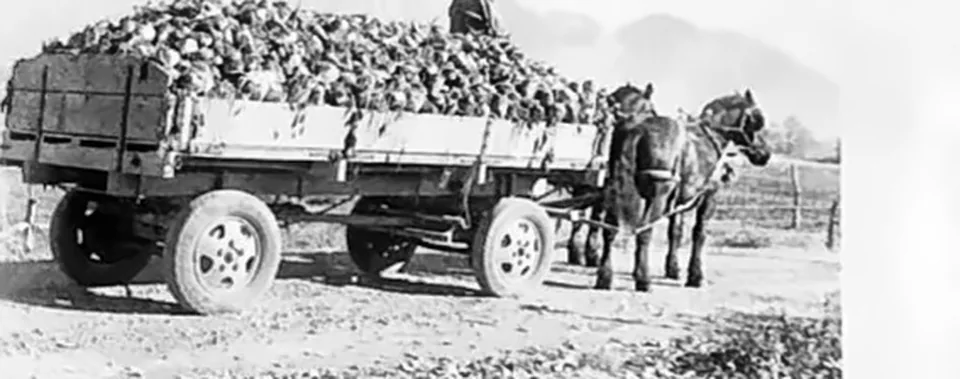
Beets were a family job. Children blocked and thinned the rows on their knees each spring, paid five to fifteen cents a row, and one boy remembered his father's challenge to thin an acre a day. In October a beet plow loosened the roots, and workers topped each one with a hooked knife, loaded wagons, and hauled them to the beet dump on the railroad, where a ramp thirty feet high tipped them into the cars. In winter the farmers hauled back wet pulp for their cows.
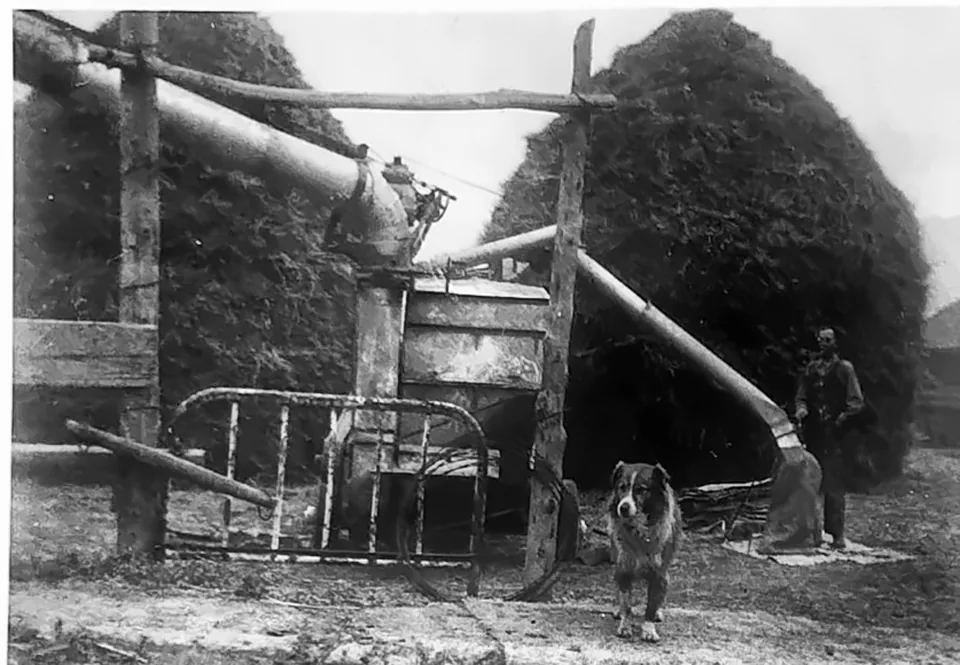
Threshing crews, silage cutting and haying brought neighbors together. Steam tractors pulled threshing machines from farm to farm, wives cooked enormous meals for the crews, and the boys tromped hay on top of the wagons. Before the war Japanese American families came to work on several Vineyard farms. Sugar beets stayed a cash crop until the factories closed in the 1970s. By then Vineyard's farmers had turned mostly to alfalfa, grain, silage and milk, on fields their grandparents had dug out of the swamp by hand.
From vineyardhistory.org/stories/making-the-lake-bottom/