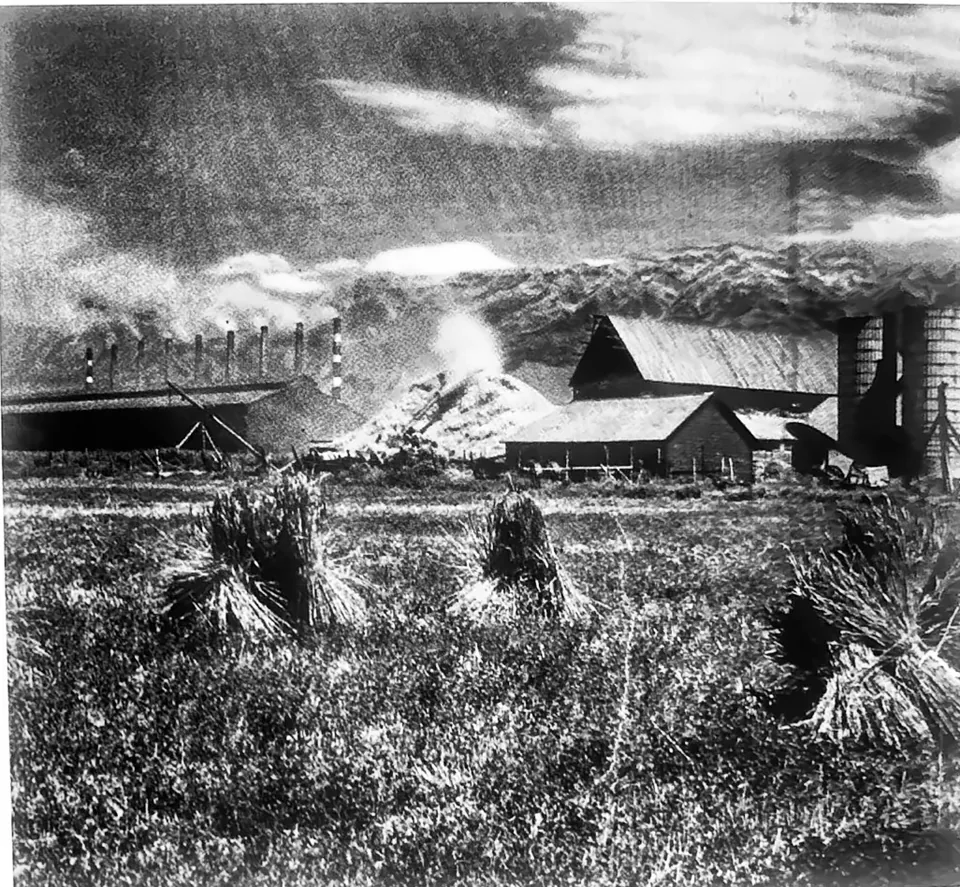
In the spring of 1942 the farm families of Vineyard learned that their land had been chosen. The buyer was not a neighbor or a developer. It was the United States government, and it wanted the ground under their barns for a steel mill big enough to matter in a world war.
Why steel, why Utah
Making iron in Utah was an old dream. Pioneers had tried to turn the ore of southern Utah into iron and never made it pay. In 1923 Columbia Steel broke ground for its Ironton plant between Provo and Springville, the first major iron works in the state. Then the war came closer. In 1941 President Franklin D. Roosevelt asked Congress to raise the nation's steel production, and planners worried about one thing in particular: if the Panama Canal were closed, the shipyards of the West Coast could be cut off from the steel mills of the East.
In November 1941 the Reconstruction Finance Corporation announced that it would ask Columbia Steel, acting for the Defense Plant Corporation, to build a new plant at a carefully chosen site. The site was Vineyard.
Five reasons
State officials spelled out the reasons. The first was land: a tract large enough, with subsoil firm enough to carry the foundations of blast furnaces. The second was rail. The Union Pacific and the Denver and Rio Grande Western both served Vineyard, and their lines came together just south of the site.
The third was water. A plant that size needed a huge supply of clean water for cooling, and about three fourths of the underground water that feeds Utah Lake was said to enter the lake in that area. The fourth was drainage, with a fall of about fifty feet from the east side of the site down to the lake. The fifth was housing. Every town in Utah County was close enough for workers to commute, and the western edge of Orem lay only three quarters of a mile away, with farm and orchard land that could become neighborhoods.
The deal
Officials admitted the one obvious drawback. The site was rich farmland, and taking it would take food out of production in wartime. But they called it the only feasible, practical site, a must. The government had the power to condemn the land. Vineyard's residents, moved by patriotism and knowing the land could be taken whether they agreed or not, accepted fair cash settlements instead.
Thirty days
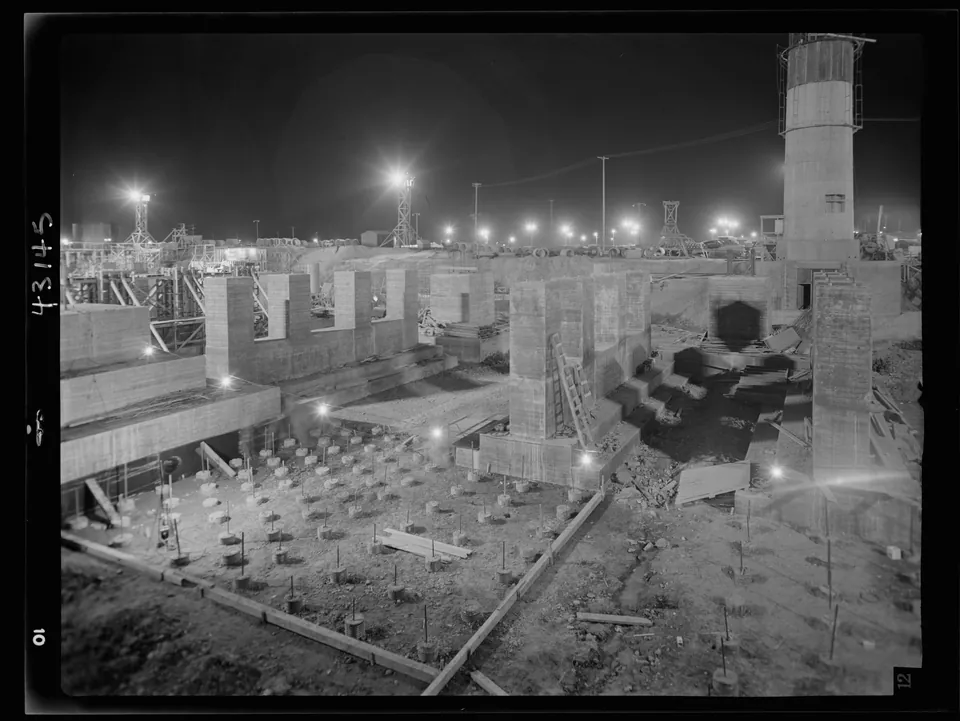
The official purchase date was March 15, 1942. Farmers were told to have their property cleared by April 4, and construction started right away. The government took about 1,500 acres, two and a third square miles. Forty farmers lost their land, among them seventeen dairymen with some three hundred milk cows. Those forty families made up about forty percent of the Vineyard ward.
One family remembered being given thirty days to vacate. They found an eighty acre tract in the low country southwest of Lehi, with nothing on it but a ten by ten shed ready to cave in. The government told them they could keep every building on the farm if they moved it themselves. They moved eight of their ten buildings, cutting the largest into sections, and set the front of the house on temporary blocks until a foundation could be poured. The ground was so wet that gravel had to be hauled in before the heavy loads could cross it. For a while the boys took their baths in a tub beside the road, holding up a sheet of linoleum for privacy, and joked that they were making the road a scenic highway.
We were given thirty days to vacate.A Vineyard farm family, 1942
Across Vineyard the same scramble played out. Houses were jacked up and hauled to Orem, Lehi, American Fork, Spanish Fork, Genola and Draper, or a mile down Geneva Road. Even the meetinghouse went. The ward's new chapel was turned over to the plant for offices, and church leaders said it was necessary so construction could go forward without delay. The bishop, Walter Holdaway, spent weeks with plant officials working out prices for the chapel, the farms and the homes, and helping families find new places. The congregation moved its meetings into the old amusement hall and the schoolhouse, and its furniture was stored wherever a home had room.
A cow speaks
Not everyone in the barnyard was pleased. A letter signed by Old Bess Holstein ran in the Sharon stake newsletter, The Voice of Sharon, on behalf of more than three hundred Vineyard cows who would soon need new stalls. The cows hoped to land somewhere with silage, grain and hay, and above all a radio in the barn, since Vineyard cows were used to getting the news red hot. They were proud to be the steel plant's neighbors, and they did not want Orem tagged to their tails.
Utah's Big Baby
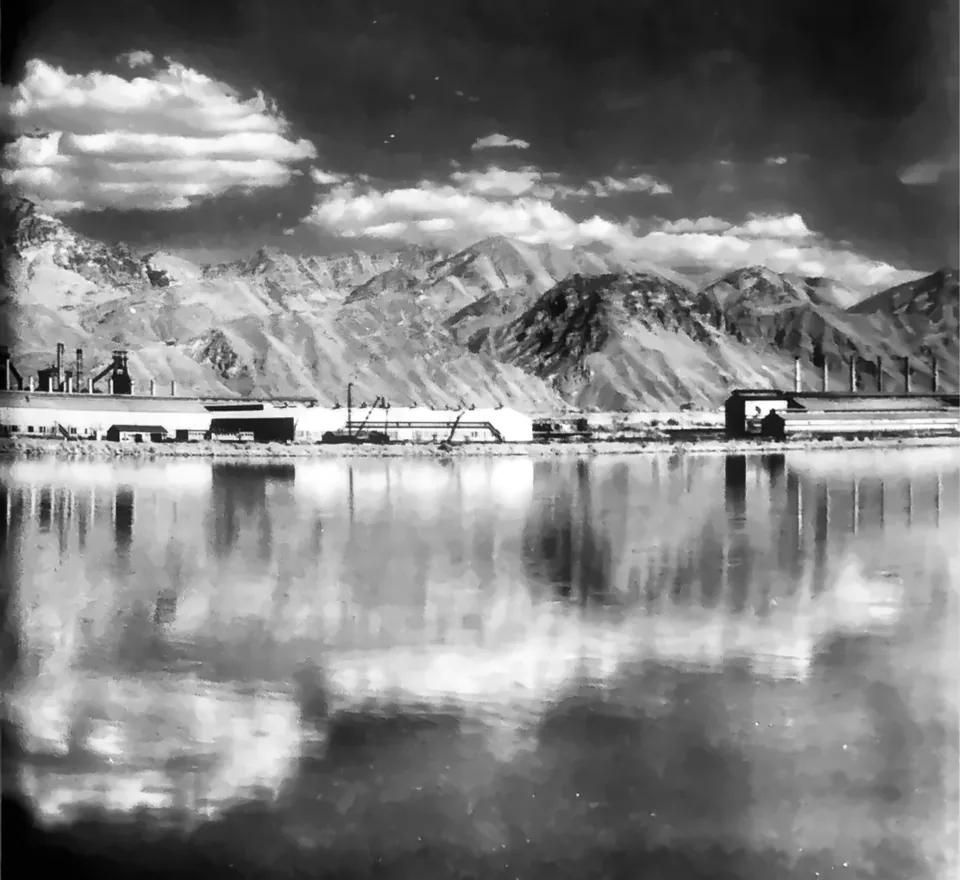
The mill took its name from the Geneva bathing resort on the lakeshore just to the north. Columbia Steel hired about a hundred subcontractors and some eleven thousand workers, whose average weekly pay of $71.60 was a remarkable wage in the early 1940s. The finished plant cost about $210 million. Its coke plant was completed on December 7, 1943, two years to the day after Pearl Harbor, and the first steel was made on February 3, 1944.
The original works included 252 coke ovens, three blast furnaces of 1,100 tons, nine open hearth furnaces of 225 tons, a slab and bloom mill and plate and structural mills, fed by a new coal mine at Horse Canyon in Carbon County, a limestone and dolomite quarry near Payson and enlarged iron mines near Cedar City. Utahns made up most of the work force, though the most skilled hands came from Columbia and other U.S. Steel plants.
Because it was finished so late in the war, the plant's part in winning it was debated, even though it shipped hundreds of thousands of steel plates and structural shapes to West Coast shipbuilders. The Saturday Evening Post called it Utah's Big Baby. A Daily Herald retrospective later said it was conceived in the shotgun haste of wartime and brought forth in a pasture. Two months after V-J Day production stopped, and a skeleton crew of four hundred kept the plant alive while its future was argued.
The answer came in 1946, when U.S. Steel agreed to buy the plant for $47 million and convert it for peacetime markets on the West Coast. A tenth open hearth followed, along with a pipe mill, a nitrogen plant, a sheet mill and an open pit iron mine in Wyoming.
For the families who stayed, the change was right outside the window. One girl who lived on the sand hill above the site said they had a ringside seat to watch the plant being built from start to finish. Many longtime Vineyard families sold and moved away, and it was strange, she said, not to have them around anymore.
From vineyardhistory.org/stories/thirty-days-to-leave/

