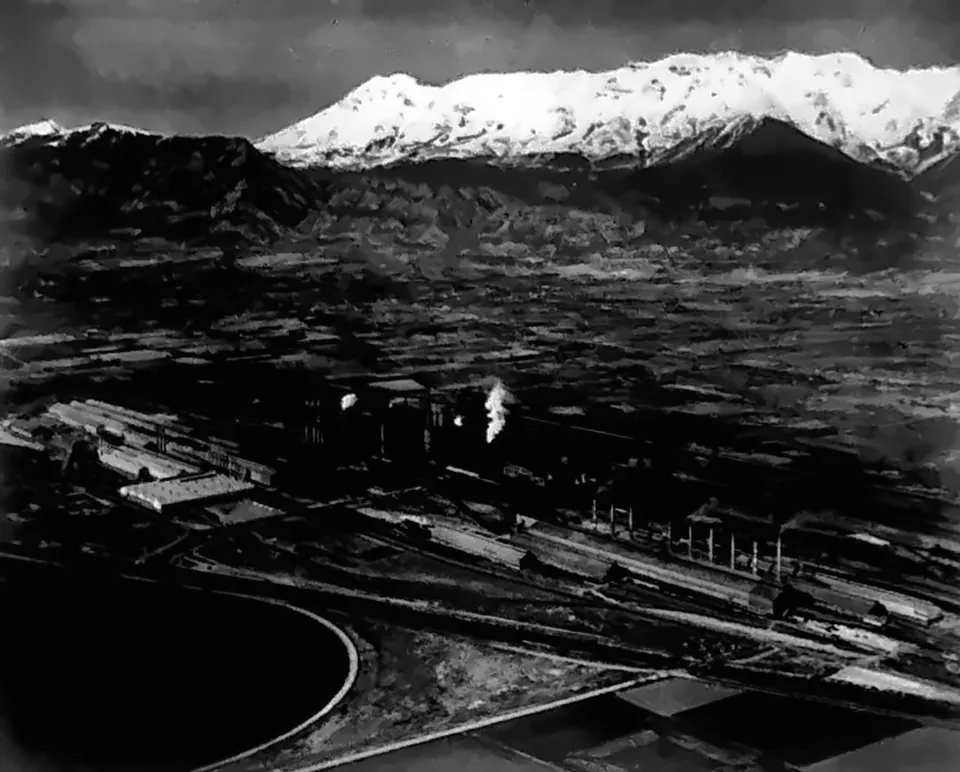
In October 1947 a young man from Vineyard named Wayne Gammon went to work at Geneva Steel. He had grown up a mile from the school, milking cows and playing in the school band, and now he walked into the open hearth, the part of the mill where iron became steel. He expected it to be his work for the rest of his life.
Up the ladder
Promotion came by seniority, one rung at a time. The work was hard and hot, and he later said it separated the men from the boys in a hurry. He was soon a second helper on one of the furnaces.
The pay explained why so many farm families sent their sons to the mill. A second helper made about three dollars an hour, plus an incentive bonus figured on how many tons of steel the crew produced in each two week pay period. He was earning about $8,000 a year, far more than most jobs in the area.
The first helper
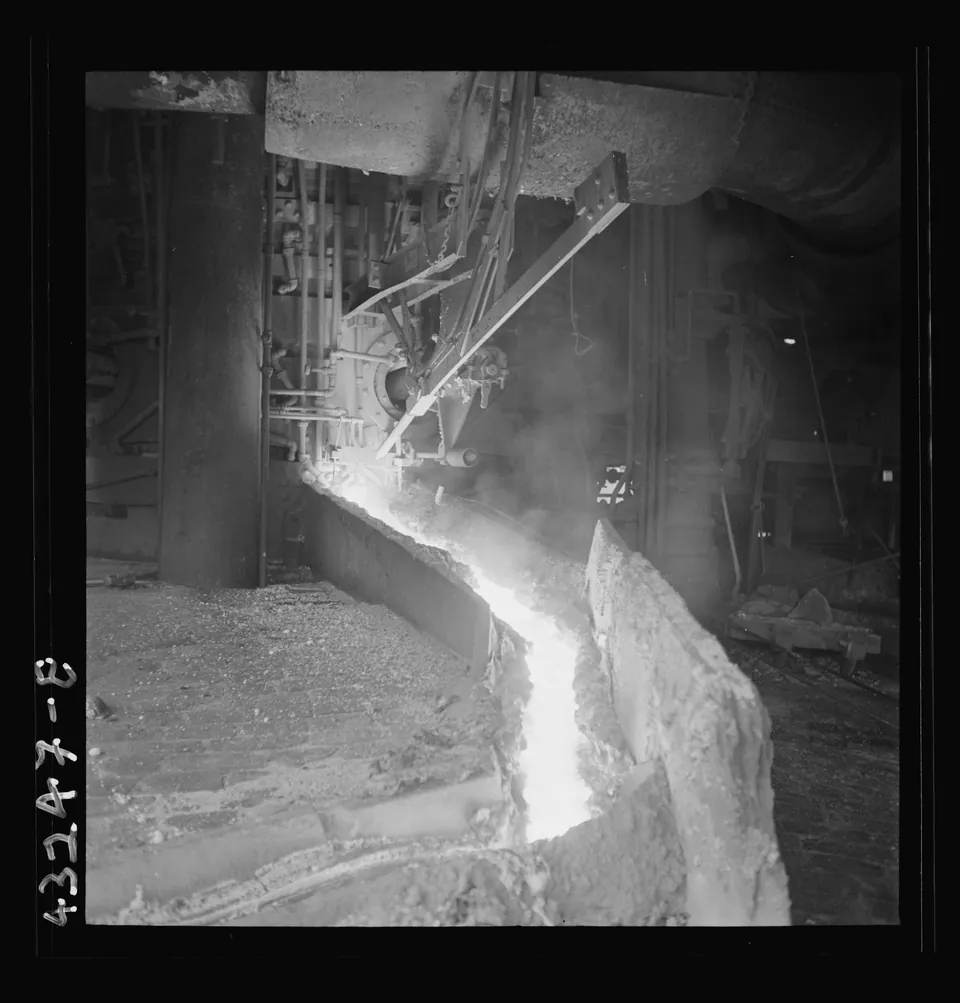
At the top of each furnace crew stood the first helper, who could make about $12,000 a year. He was responsible for charging the furnace with limestone, iron ore, scrap iron and molten pig iron, and for getting the chemistry right to meet each buyer's specifications. A single heat took about eight hours. The bath of molten steel was brought to about 3,300 degrees Fahrenheit, and when it was ready, three hundred to three hundred fifty tons of it were tapped into a giant ladle.
That job called for judgment and experience more than muscle, so the first helpers were older men, some working until they retired at sixty five. Moving up was slow. A second helper could wait eight to ten years for his turn.
Tapping the heat
Until then, the second helper's work was mostly behind the furnace, and helping the other crews tap their heats. His tools were scoop shovels, crowbars, cables, oxygen lances and compressed air to blow out the tap hole. The air in the work area ran from 130 to 160 degrees, and men wore long underwear under their work clothes to keep the heat off their skin.
The hard, hot work separated the men from the boys in a hurry.Wayne Gammon, Geneva steelworker
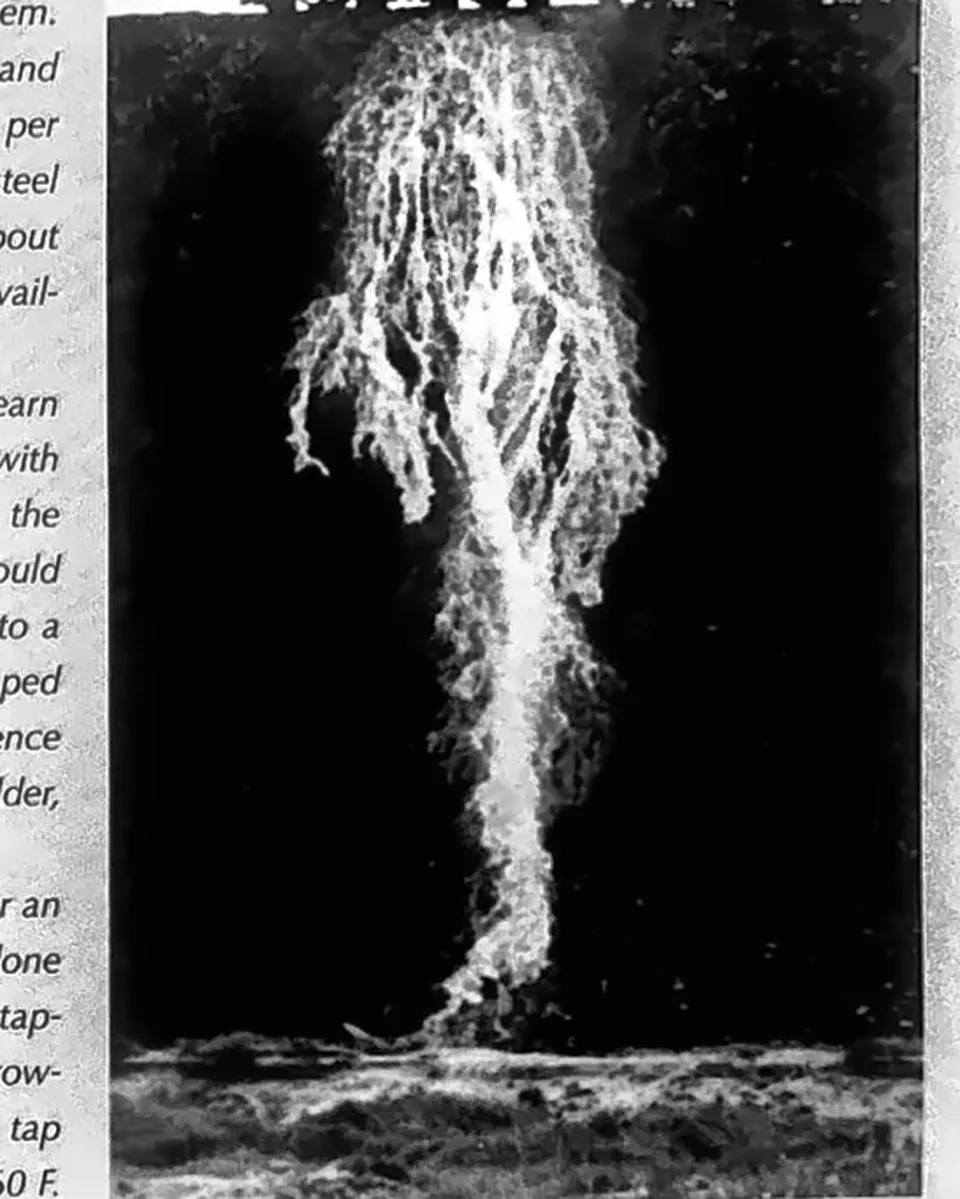
When a furnace was ready to tap, he put on a full length asbestos overcoat, an asbestos helmet and long asbestos gloves. Then he took an oxygen lance and burned through the seal of the tap hole to release the steel. Little gobs of molten metal and sparks flew everywhere. A high overhead crane lifted the full ladle, carried it to a string of molds and poured the steel into ingots bound for the rolling mill.
After the furnace was drained, there was usually a red hot mass of steel hanging below the tap hole. It had to be pried loose with crowbars and cables hooked to a crane, and the heat was nearly unbearable. At the end of an eight hour shift, he remembered, he was in a state of total exhaustion.
Danger overhead
The danger never let up. Overhead cranes, charging machines and railcars loaded with scrap and ore moved constantly, and the noise never stopped. The furnace roofs were built of tapered bricks about twenty inches long, very heavy when new. As a roof aged, the bricks melted away in the heat, and now and then a roof caved in, splashing molten steel fifty to seventy feet in every direction. You were always on the alert, he said, ready to run.
He was not alone. Families up and down Geneva Road sent fathers and sons into the mill. One Vineyard man worked at Geneva from the day it opened until his sixty fifth birthday, walking to the gate in about fifteen minutes and counting himself late if he left home after 7:15. For a time in the 1950s he and six of his sons all worked at the plant at once, and they were featured on the cover of U.S. Steel's company magazine.
The open hearths ran at Geneva for more than four decades. In 1991 they were replaced by two basic oxygen furnaces that made steel faster and far cleaner. But for a generation of Vineyard men, the open hearth was the job: the best pay in the valley, earned in asbestos coats beside three hundred tons of liquid steel.
From vineyardhistory.org/stories/inside-the-open-hearth/