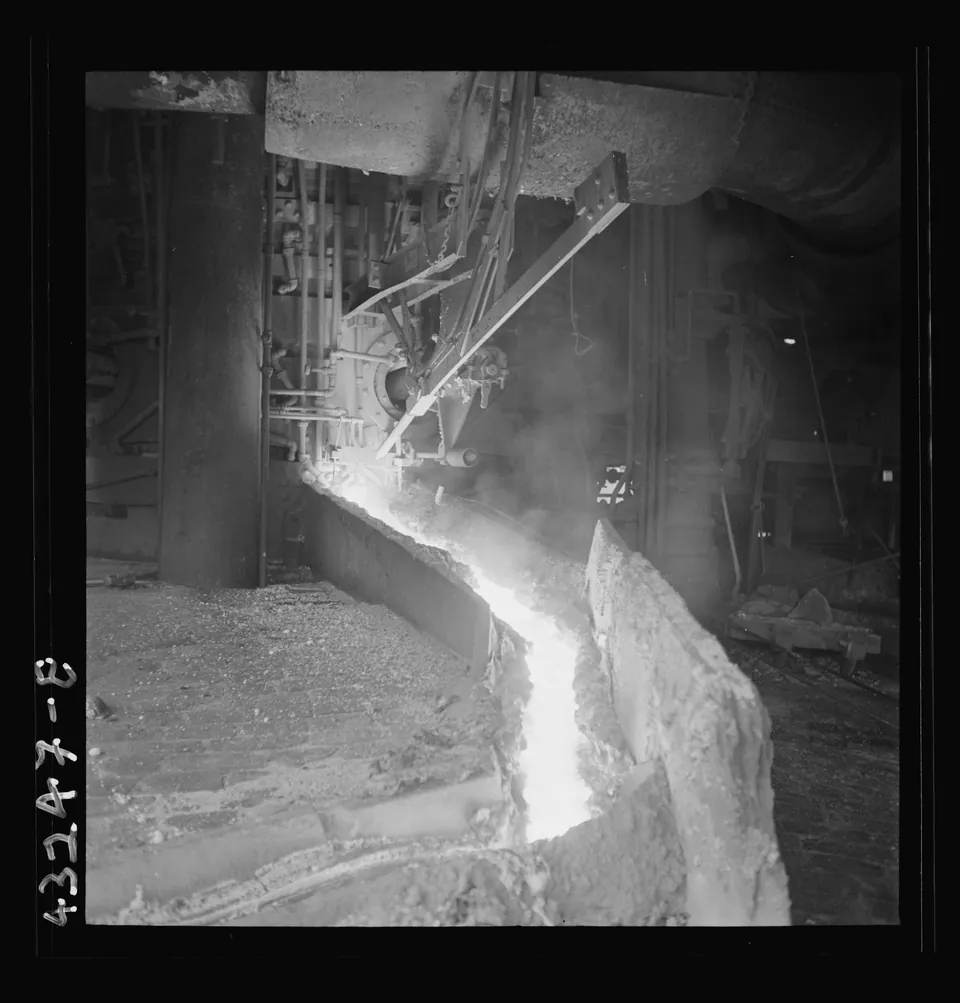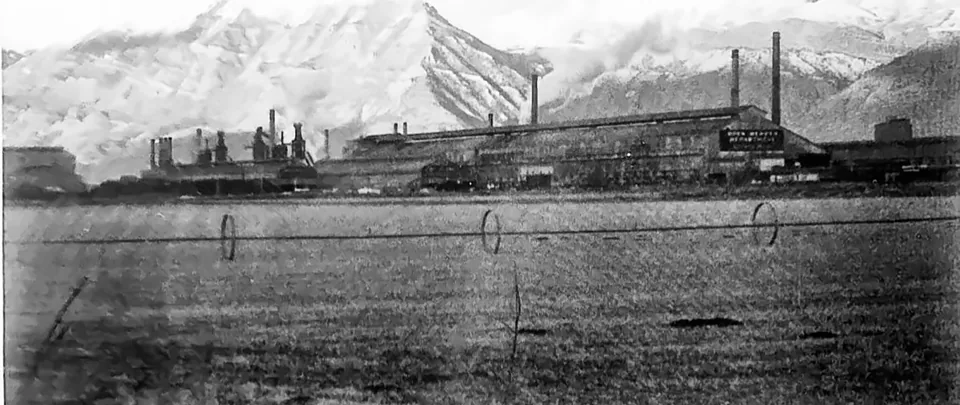
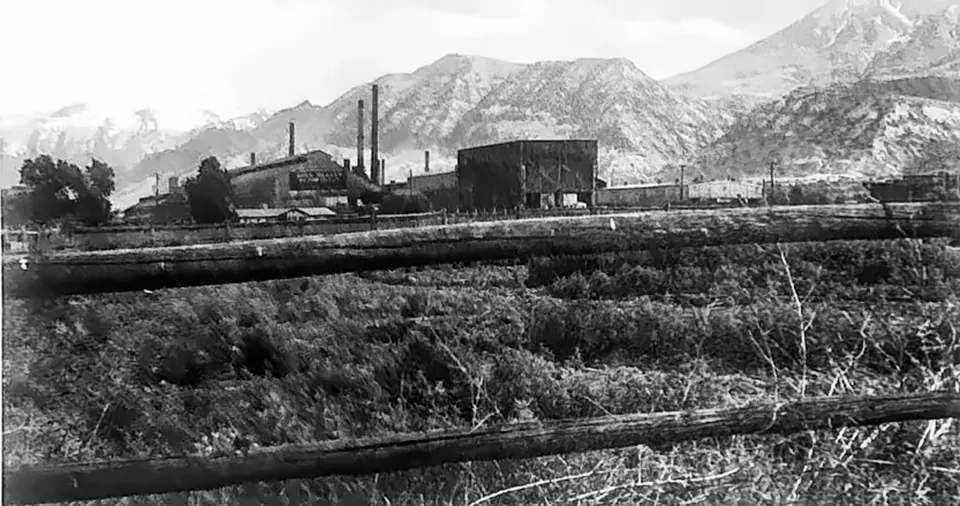
After U.S. Steel bought Geneva in 1946, peacetime demand on the West Coast gave the Utah Valley steel industry a long run of stability. The plant kept growing: more open hearth capacity, a pipe mill, a nitrogen plant, a sheet mill and an iron mine in Wyoming.
People make the difference
By the 1960s a new threat had arrived. Imported steel, much of it subsidized by foreign governments, was landing in West Coast ports at prices American mills struggled to match. Geneva's general superintendent, George A. Jedenhoff, asked every employee to commit to superior performance, a team effort to raise efficiency and quality so the plant could stay competitive. The program was called People Make the Difference.
Employees took it up, and with selective modernization and a wider line of products, Geneva held its place. Later improvements included a mill to roll wide flange beams, oxygen equipment for the open hearths, new heat treating for carbon and high strength plate, and modernized plate and strip mills.
The long strike
The crisis in American steel became general in the 1970s, when U.S. Steel closed sixteen of its facilities. Community support in Utah Valley helped keep Geneva open, but the troubles continued into the 1980s. The Provo Daily Herald reported that the plant needed an estimated $1 billion of modernization to stay competitive, and the parent company, by then known as USX, never made that investment.
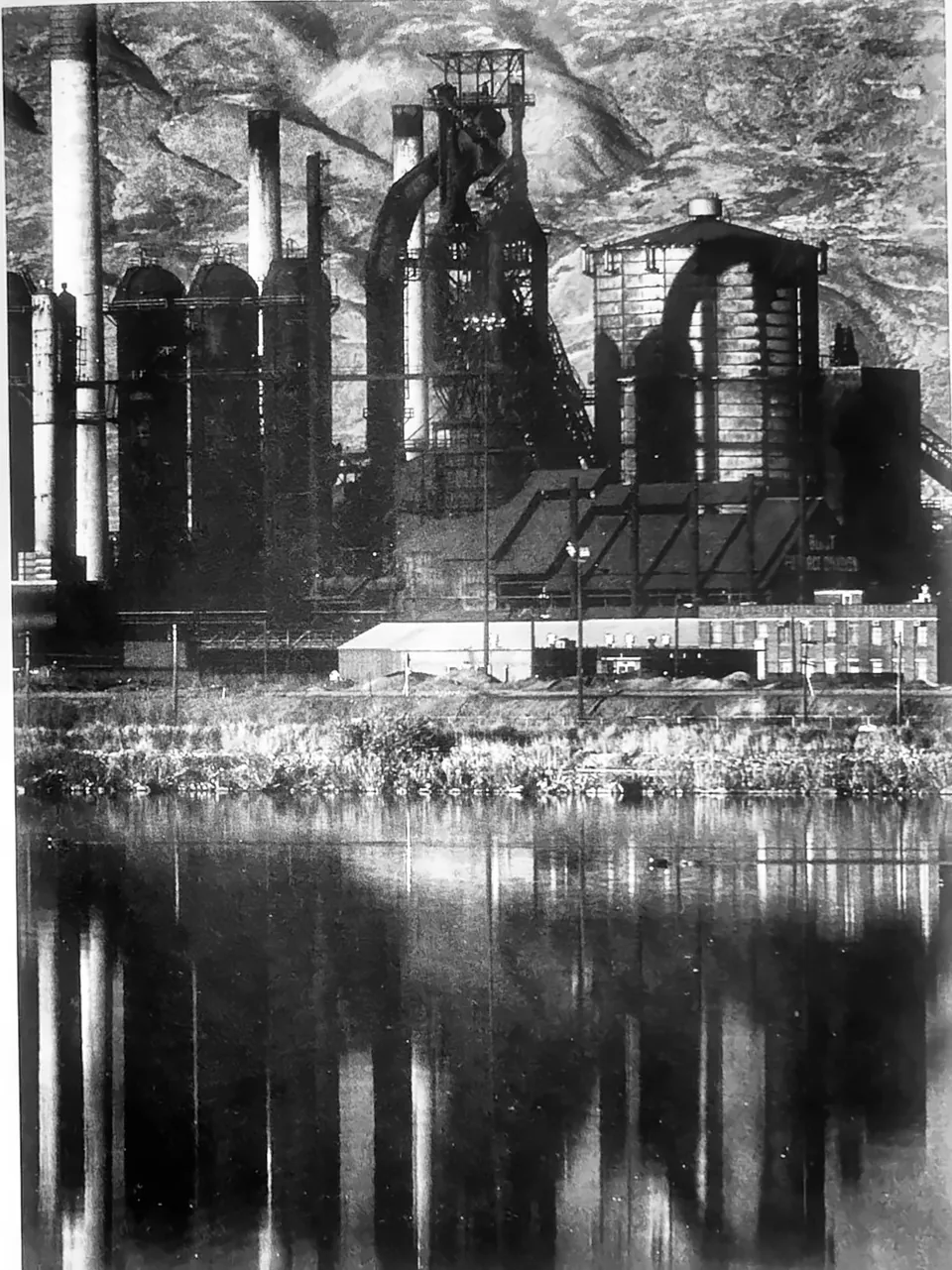
In 1986 USX shut Geneva down in the middle of a bitter strike that lasted thirteen months and shook the whole valley. Lines grew at the unemployment office, and study after study tried and failed to settle whether the plant had a future. Geneva workers later won a long running lawsuit, and the retirees of the USX years received their pensions.
Basic Manufacturing Technology
Some people still believed in the mill. A group of investors calling themselves Basic Manufacturing Technology, led by Joseph A. Cannon, bought the plant in 1987. On the first day production resumed, workers flooded back through the gates, eager for a fresh start. After a shaky beginning the plant began breaking production records.
The new owners also changed Vineyard's history in another way. A 1980 state law required a company in an unincorporated area to operate inside city limits whenever it changed owners or expanded. The new Geneva could let Orem annex it, join Lindon, or become the tax base of a new town of Vineyard. The company chose Vineyard, and endorsed the town's petition to incorporate in 1989.
On the first day production resumed, workers flooded back to the plant.
Cleaning the air
Geneva also took on its long standing pollution problems. In September 1991 it finished a $70 million project to install two basic oxygen furnaces, known as Q-BOP furnaces, which replaced the old open hearths and cut airborne nitrogen oxide emissions by 95 percent. A biological wastewater treatment plant, a benzene gas blanketing system, coke oven gas sulfur removal and a baghouse for the sinter plant followed.
Those projects mattered to the town that grew up around the mill. Vineyard's leaders later wrote that Geneva had spent millions cleaning up its operations to meet the Clean Water Act, the Clean Air Act and other emission standards, at a time when competition at home and abroad was fierce.
A good neighbor
Geneva had long been a generous neighbor. In 1963 Richard Stone, an administrator at the plant, organized support for what is now the United Way of Utah County, then called the United Fund. It is a good, organized way to give, he said, a way to pay your share to take care of the less fortunate. Over the years Geneva gave more than $2.7 million to the cause. It helped found the Utah Valley Economic Development Association, sponsored the Freedom Festival in Provo and Orem until 1996, and supported the Springville Art Museum, the Boy Scouts and Geneva Elementary School.
The last years
The end of the 1990s was hard. At the close of 1998 more than eight hundred employees were laid off or furloughed after a fourth quarter loss of $21.6 million. Geneva and eleven other steel producers filed dumping charges against Russia, Japan and Brazil for selling subsidized steel in the American market. On February 1, 1999, Geneva Steel filed for Chapter 11 bankruptcy.
Even then the mill kept running, and the town it had made possible kept watching its stacks. Through every rise and fall, from the war plant in a pasture to the modern furnaces of the 1990s, Geneva remained the biggest neighbor Vineyard ever had.
From vineyardhistory.org/stories/genevas-second-life/