Early Vineyard families kept a few cows for themselves. Milk, cream, butter, clabber and cottage cheese were everyday food, and skim milk went to the pigs. Early in the 1900s the herds grew, a real dairy industry took shape, and Vineyard became one of the larger centers of milk production in Utah. Field work, church meetings, outings and even shopping were scheduled around the milking.
The first milkhouse
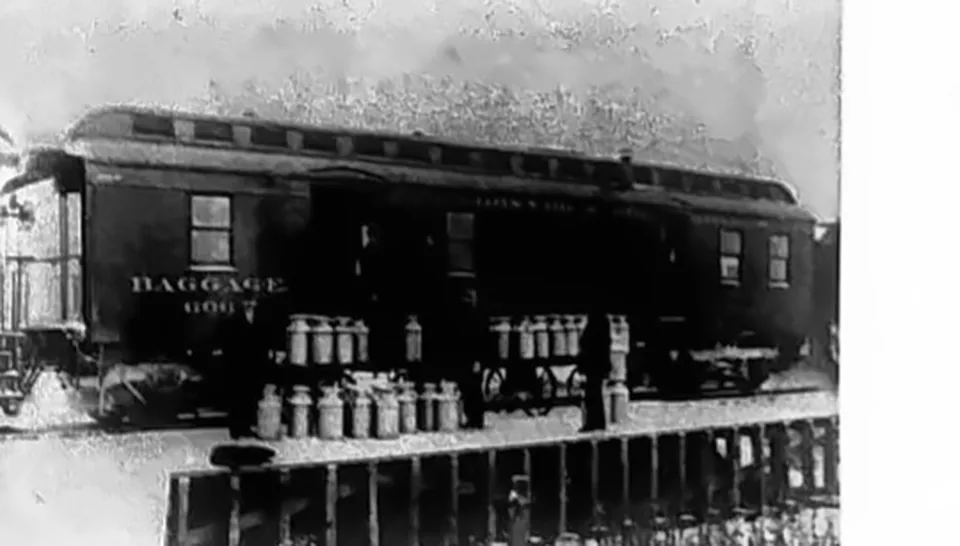
In 1890 George M. Smoot and Andrew Holdaway set up the first milk receiving station in Vineyard, beside the Denver and Rio Grande tracks. Farmers brought their milk in ten gallon cans, and it waited in a small room for the train to Salt Lake City. In 1901 the station was renamed the Union Dairy, and milk was shipped as far south as the mining towns of Eureka, Silver City and Mammoth.
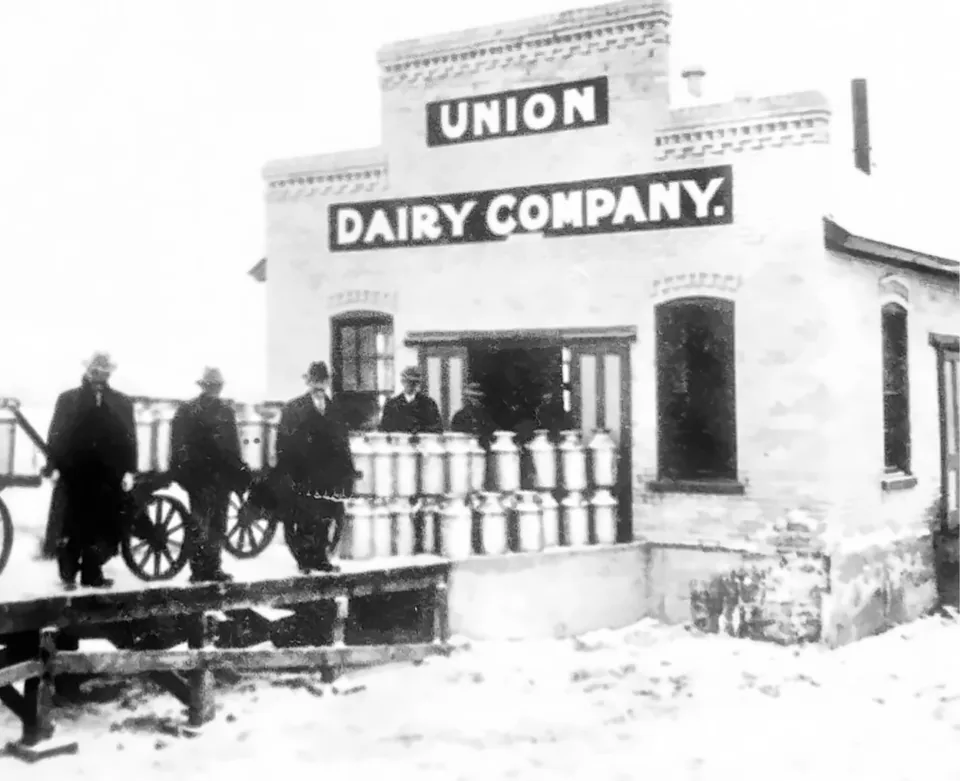
The station was enlarged, given a small boiler for scalding cans, and modernized again in 1911 with scales and an aerator, a cooler whose ice cold tubes chilled the milk as it ran slowly over them. Between 1901 and 1943 four Vineyard men took turns supervising the plant: Conrad Maag, Seth Rawlings, Kirby Allen and Joy Madsen.
Ice from the lake
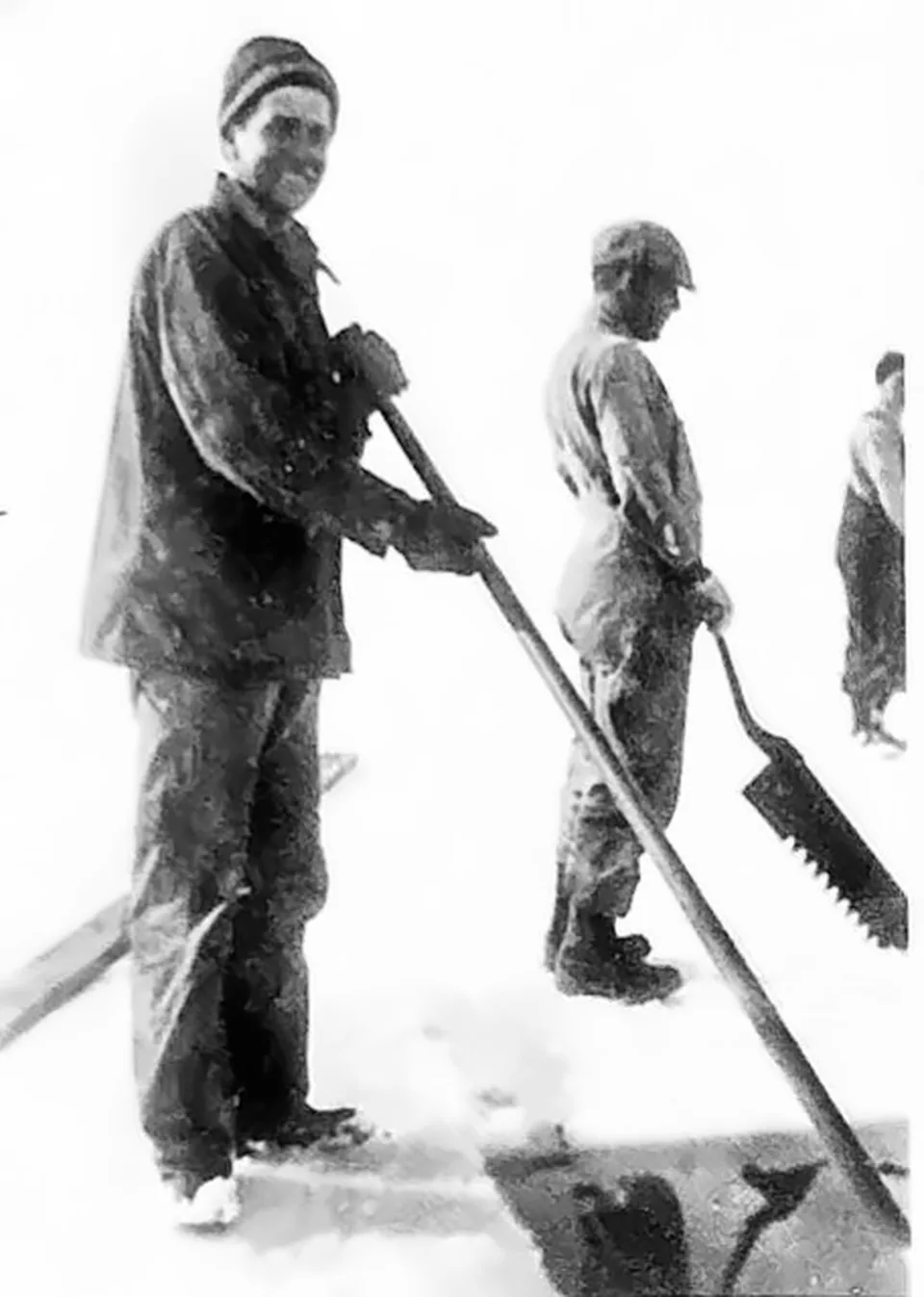
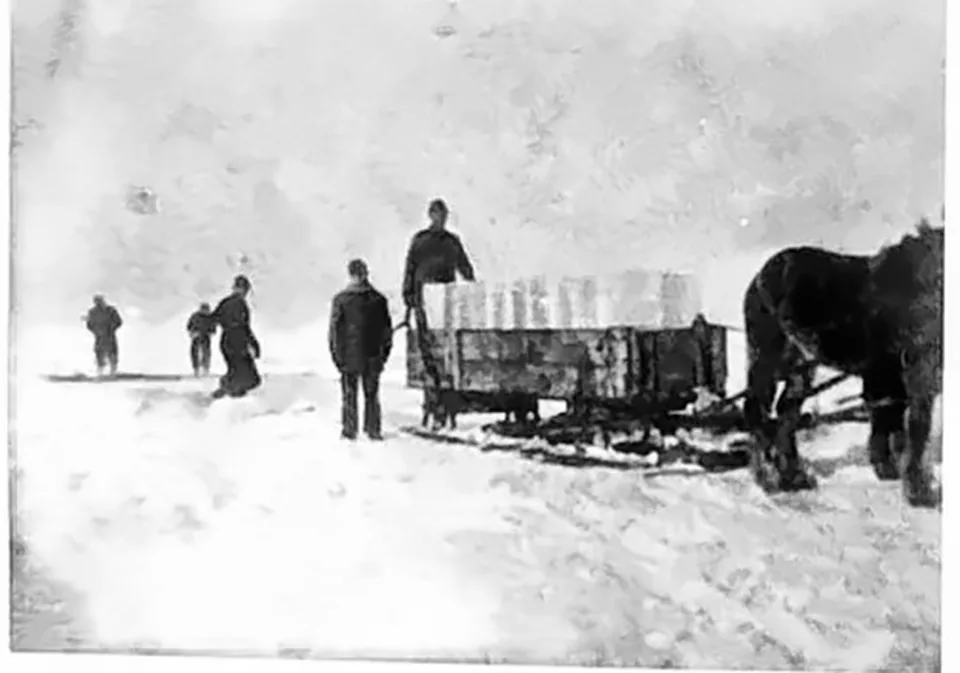
Cooling depended on Utah Lake. When the lake froze thick, dairymen drove out onto the ice, sawed huge blocks, and hauled them by bobsleigh to the ice house, where they were packed in sawdust. About two hundred tons were harvested every winter to keep the milk cold the following summer until the train came.
The train was the heart of the operation, and not always a punctual one. One man who worked the milkhouse remembered loading cans onto wagons and wheeling them out to the train from Eureka, which was supposed to arrive at ten and never did. One day something startled the farmers' horses as they waited, and the whole line of buggies ran away in a tangle. He said he could do nothing but lie down and laugh.
Better cows
Vineyard dairymen also worked to improve their herds. Around 1916 Elmer Holdaway and his brothers Milton and Walter, impressed by the offspring of a purebred Holstein sire from Utah State Agricultural College, traveled to Wisconsin and other dairy states to buy registered Holsteins. Boxcars were fitted with stanchions and stalls, and Milton rode the slow freight home with the cattle, feeding them and milking the ones in production. Their calves went to herds all over the area.
It was the train that came from Eureka that stopped to pick up the milk. It was supposed to come at ten o'clock, but it never was on time.J. J. Madsen
The milk had to taste right. Winter feed included wet sugar beet pulp hauled from the slicers at Lake View or Lehi. It smelled so bad that everyone along the road knew when a load went by, but cows loved it. Too much pulp or green alfalfa could flavor the milk, so the local dairy association tasted every ten gallon can before accepting it for shipment. Farmers did not always like having milk rejected, but the lesson stuck.
Hard times
The Depression nearly broke the dairies. After 1929 there was more milk than buyers, and prices fell below the cost of producing it. Vineyard dairymen joined others from Utah, Salt Lake, Davis and Wasatch counties to organize a producers' association to pool their milk and bargain together. It struggled, as members drifted away to sell cheap milk on their own, but by 1934 and 1935 a new federated association was selling most of the region's milk to Salt Lake City processors. Some families got through those years by buying cows and shipping them by the trainload to California, which was growing fast as people fled the Dust Bowl.
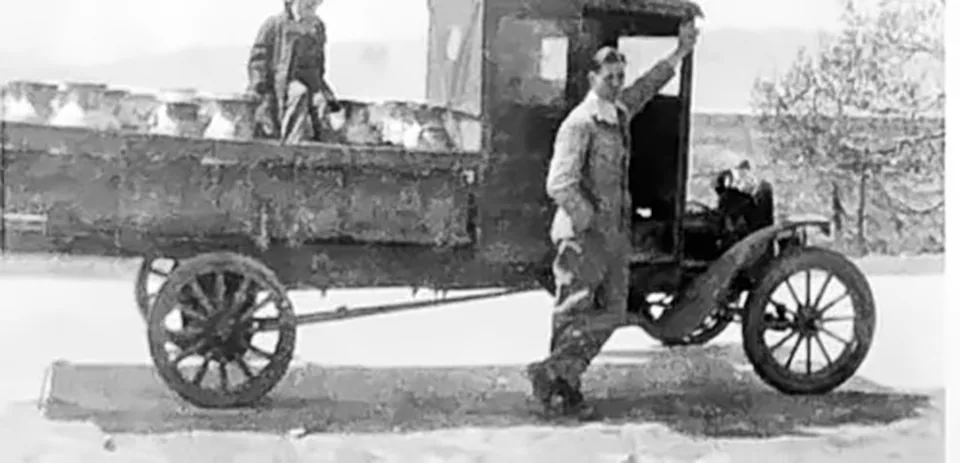
Before World War II about forty dairy farms operated in the Vineyard area. Geneva Steel ended that era. When the government bought the mill site in 1942, it took the land of seventeen milk producers and the receiving plant itself. A new plant went up half a mile south, but within two years the old way of shipping milk by train was over. Trucks began picking up milk at each farm and hauling it straight to Salt Lake City.
The end of the line
After the war the farms that remained grew larger and more mechanized. By 1957 many Vineyard dairymen had glass pipeline parlors that sent milk directly to refrigerated tanks. Smaller producers quit one by one. By 1976 eight modern dairies remained, and by 1999 only two. For most of a century, though, dairying had been the steadiest income Vineyard had, a milk check every month in years when little else paid.
From vineyardhistory.org/stories/the-milk-train/