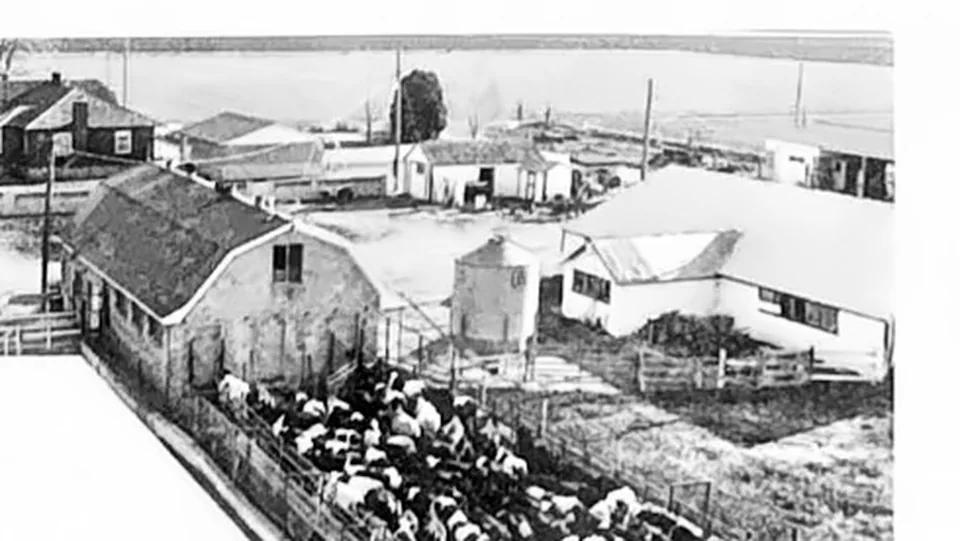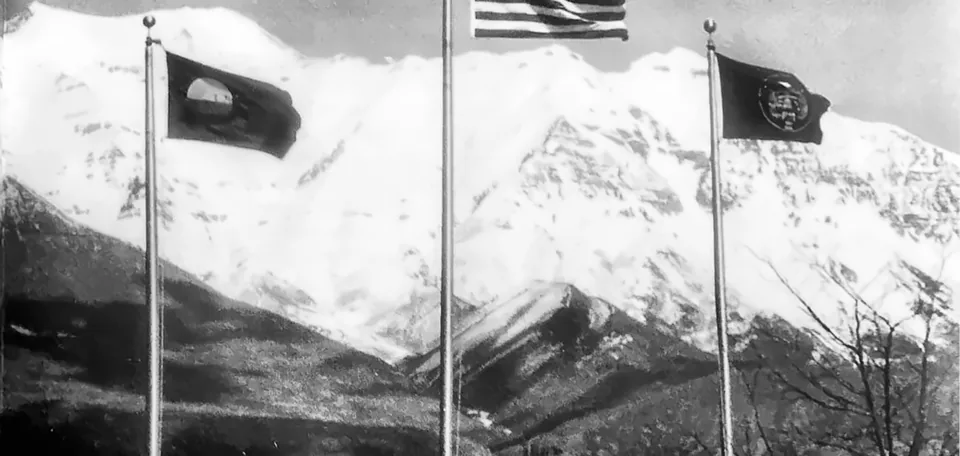
On April 25, 1989, the Provo Daily Herald announced Vineyard's incorporation with a headline that made people smile: Newest town has only 148 people, but one big asset. Everyone knew the asset was Geneva Steel. The people of Vineyard liked to say they had a bigger one: a stubborn determination to keep the heritage of their small community.
A first try
The idea was not new. As Provo and Orem grew quickly around them, Vineyard's leaders first approached Geneva Steel with a proposal to incorporate in 1972. The proposal was denied. Without a town of their own, residents feared they would have no say in what happened to their land.
The door opened when Geneva changed hands. Under a 1980 state tax law, a company in an unincorporated area had to operate inside city limits when it changed owners or expanded. When Basic Manufacturing Technology bought Geneva from USX, it had three choices: bring Orem's boundary out to the plant, seek annexation to Lindon, or become the tax base of a new town of Vineyard. The company chose Vineyard, and backed the petition enthusiastically.
What the petition said
The petition made four promises. Preserve the heritage of the community, meaning the labor that pioneers had put into redeeming the land from the bogs. Preserve the integrity of the Vineyard lifestyle and name, an agricultural community with outdoor pleasures like hunting, birdwatching and walking. Protect Vineyard's own interests, especially its water rights in the underground aquifers and good relations with Geneva Steel. And continue to contribute to the Utah County economy, keeping living space for people who wanted to stay while remaining a good neighbor to the mill.
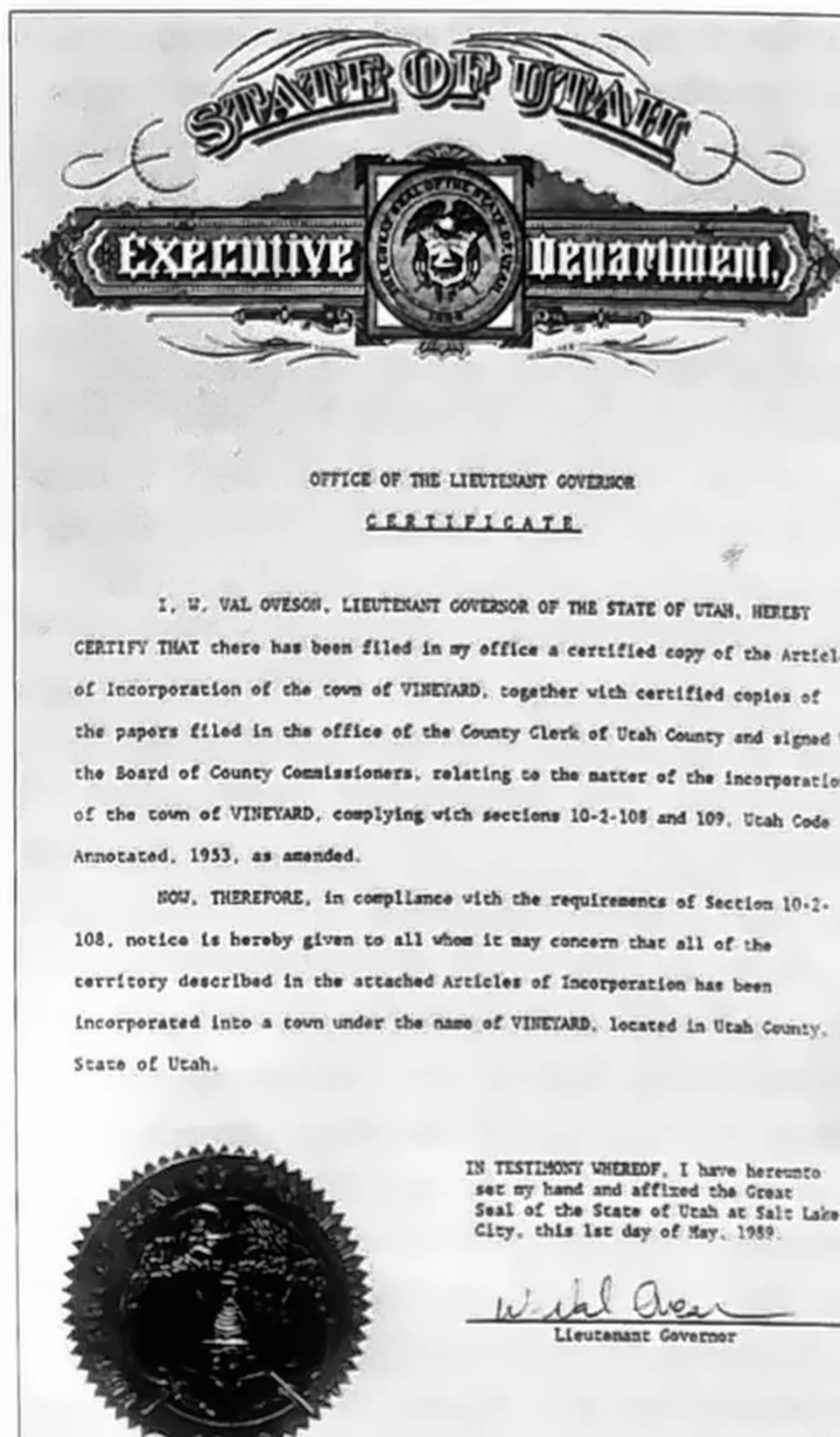
Geneva's letter of support used similar language, calling for greater local autonomy and control, more active participation in proposed development, and better municipal services.
Orem's questions
Not everyone agreed. Orem officials asked whether it made sense to place a new town between Orem and the lake. How would such a small place pay for fire and police protection? Would Orem have any say in environmental issues? Orem had already included Vineyard in the plans for its sewer, water and power systems, had assumed the whole area would one day be inside its limits, and had Vineyard on its annexation declaration.
We'll cross that bridge when we come to it.Vineyard's answer to concerns about growth, 1989
The county asked the Mountainlands Association of Governments to study the proposal, and Orem agreed to wait for its report. For Vineyard, the irony was plain. One of its main reasons for independence was the fear that Orem would annex the farms and fill them with dense housing, erasing Vineyard's identity.
The hearing
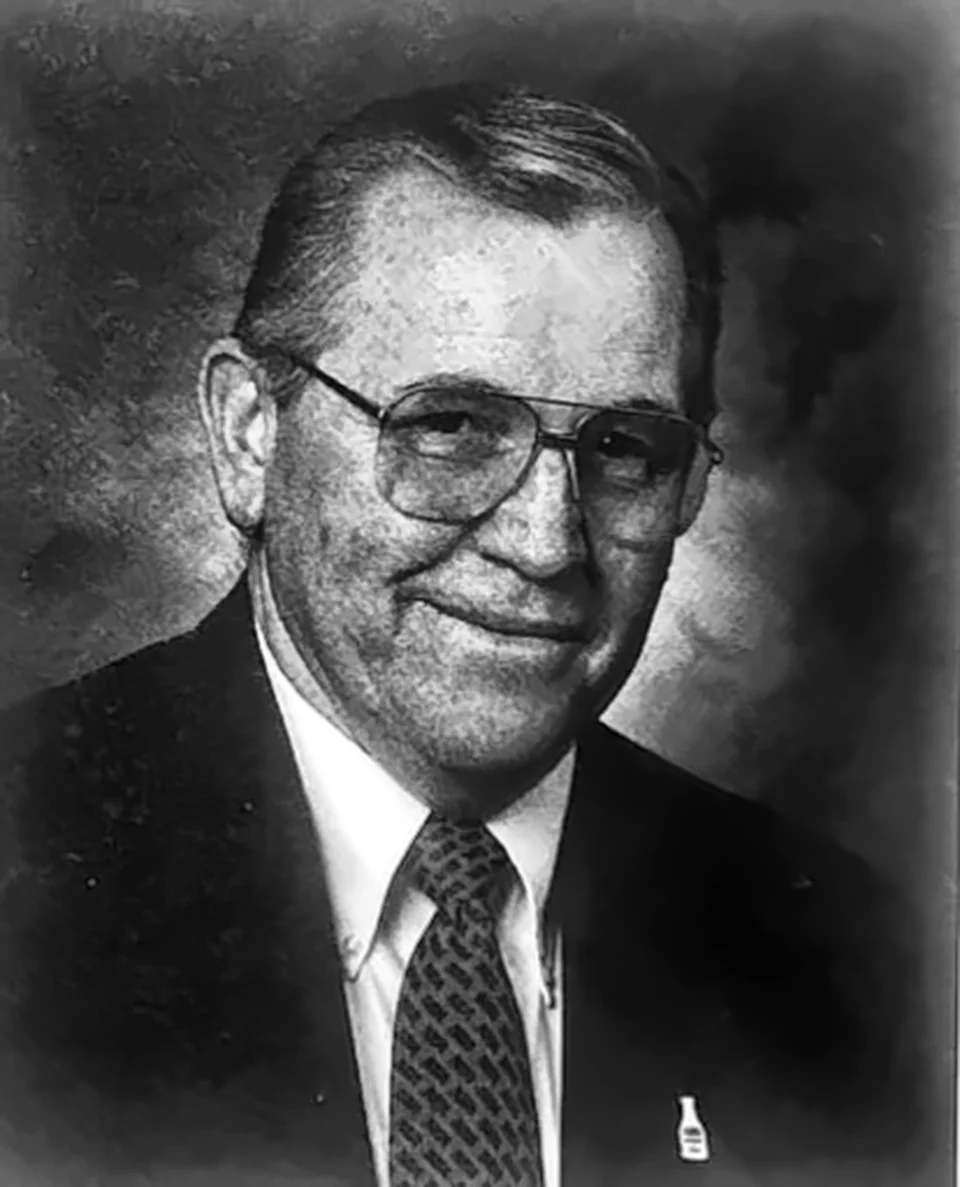
The legal requirements were simple: file a petition with signatures and wait for the County Commission to review it. With 148 residents, Vineyard met the population requirement of 100 to 800. The proposed town covered 2,805 acres, a little more than four square miles, and the steel mill owned nearly 1,600 of them. All but five voting age residents signed.
On April 24, 1989, forty Vineyard residents attended the public hearing before the Utah County Commission. Homer Chandler, executive director of Mountainlands, recommended postponing the vote while alternatives were considered. Vineyard's leaders showed they had studied every concern. The biggest was the future of the steel plant, whose taxes would pay for utilities, fire and police protection, and Geneva's plans to modernize and expand weighed heavily in the town's favor. To the other concern, growth, Vineyard gave a simple answer: we'll cross that bridge when we come to it.
A bunch of farmers
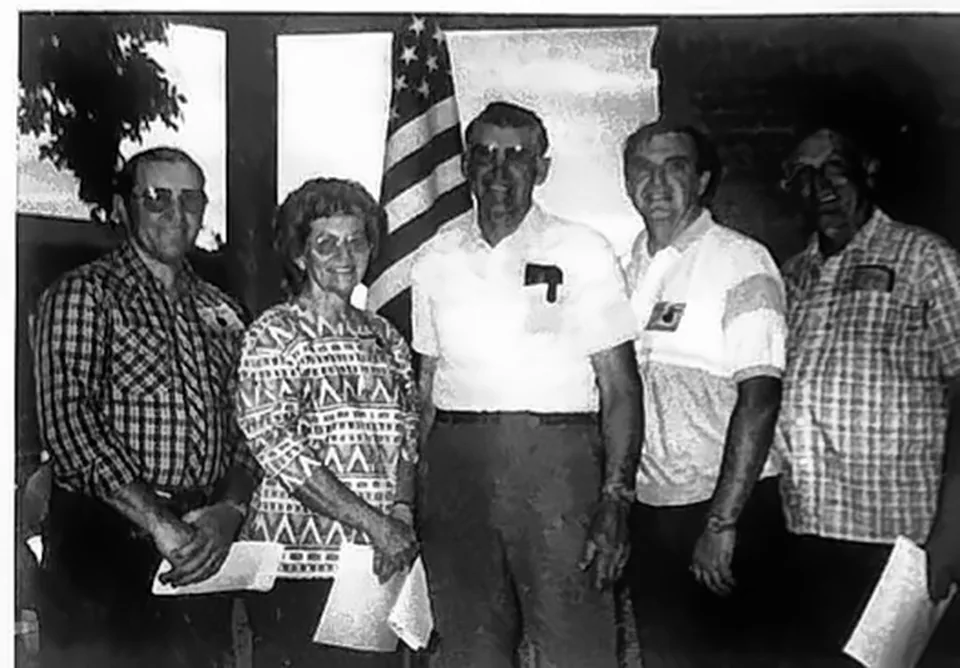
The commission approved the petition on May 9, 1989. Much of the credit went to one man, J Rulon Gammon, a full time dairyman who had pushed the effort for years and was elected mayor in an open election even before the town had permission to exist. He had no illusions about the job. Let's face it, he later told a reporter, we're a bunch of farmers who have a difficult time learning how a municipality works.
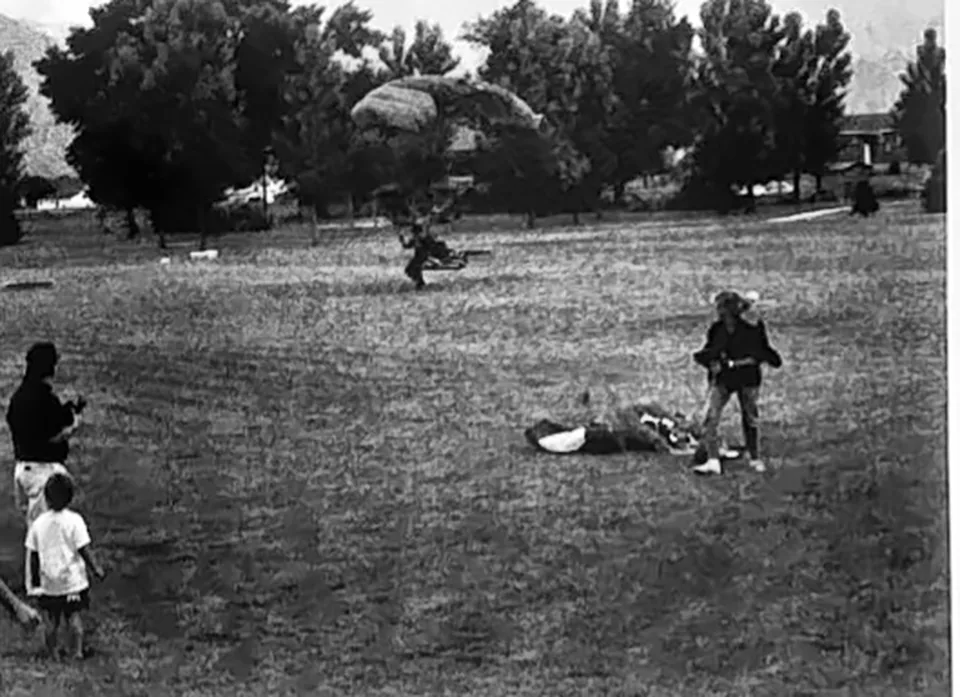
The first town council was Morris Clegg, Stanley Morris, Robert Holdaway and Grace Holdaway. Eleven days after incorporation the whole town gathered for what it called a Vineyard Town Family Social. The mayor reminded everyone that the community was nearly a hundred years old, and promised that the town would celebrate its founding every year from then on.
From vineyardhistory.org/stories/the-petition-of-1989/